
Standard Operating Procedures (SOP)
A Standard Operating Procedure (SOP) is a set of written instructions that explains how to perform a specific activity or process safely and responsibly. SOPs are typically required when an activity poses a higher level of risk than normal. If you need access to an SOP or have a question regarding ISU SOPs, please contact EHS.
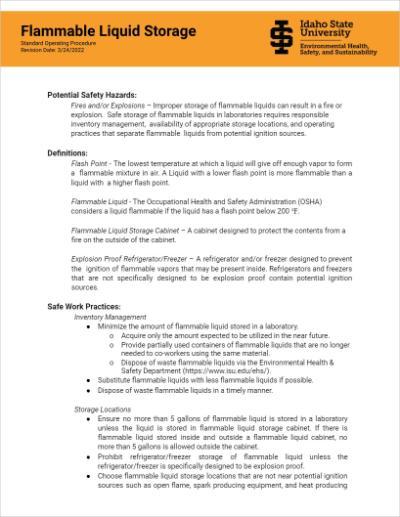
The OSHA Laboratory Standard requires that employers have a Chemical Hygiene Plan that includes: "Standard Operating Procedures (SOP)s relevant to safety and health considerations to be followed when laboratory work involves the use of hazardous chemicals". SOPs must be included or linked in each lab's "Lab Specific Safety Plan".
ISU maintains many Standard Operating Procedures that are available upon request to the Assistant Director of OSH. Some of the available SOPs include, but are not limited to:
- Asbestoes
- Asbestos Abatement Oversight
- Bloodborne Pathogen Spill Response
- Chemical Inventory
- Chloroform
- Compressed Gas
- Container Labeling
- Crane Safety
- EHS Spill Response
- Environmental Spill Response
- Ethidium Bromide
- Flammable Liquid Storage and Handling
- Formaldehyde
- Hazardous Materials Relocation
- Hydrochloric Acid
- Lead Bricks
- Lead Paint on Handrails
- Mercury Spill Response
- Metallic Lead SOP
- Methylene Chloride
- Nitric Acid
- Peroxide-Forming Materials
- Raku Kiln Firing
- Sodium Azide
- Tellurium Powder
The contents of an SOP might vary, depending on the subject. SOPs might contain step-by-step instructions for the performance of a particular activity, or they might provide a set of guidelines or useful safety-related information that should be considered. Information might include potential safety hazards and how to address them: PPE and equipment requirements, safe work practices, and important regulatory information.